Menopause is a natural stage in a woman’s life, usually between 45–55 years. Hormonal changes during this period can lead to hot flashes, mood swings, sleep disturbances, joint stiffness, weight changes, and fatigue. Yoga is a holistic practice that addresses these physical, mental, and emotional changes.
Main Focus Areas During Menopause
A. Hormonal & Endocrine Balance
Goal: Stimulate endocrine glands to balance estrogen, progesterone, thyroid, and adrenal hormones.
Recommended Poses:
- Bhujangasana (Cobra Pose): Strengthens spine, stimulates adrenal glands
- Setu Bandhasana (Bridge Pose): Activates thyroid and pituitary glands
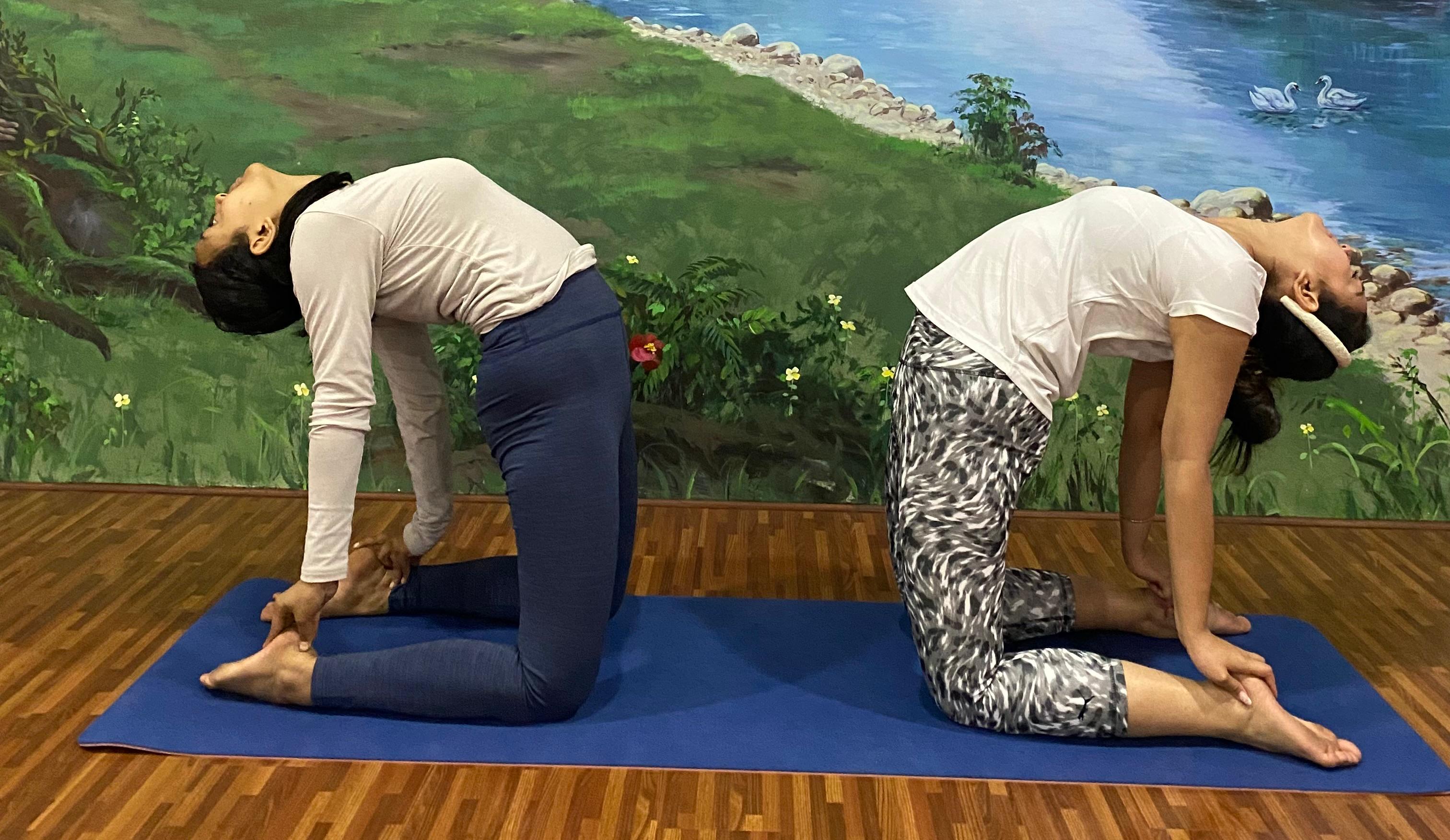
- Ustrasana (Camel Pose): Opens chest and stimulates thyroid and parathyroid
Pranayama:
- Anulom Vilom (Alternate Nostril Breathing) – balances nervous system and hormones
Lifestyle Tips:
- Include phytoestrogen-rich foods like soy, flaxseeds, and legumes
- Maintain regular sleep patterns
B. Nervous System & Stress Relief
Goal: Reduce anxiety, irritability, mood swings, and improve sleep quality.
Recommended Poses:
- Viparita Karani (Legs-Up-The-Wall Pose) – calms nervous system
- Supta Baddha Konasana (Reclined Bound Angle Pose) – relieves tension
- Shavasana (Corpse Pose) – deep relaxation
Pranayama & Meditation:
- Bhramari (Humming Bee Breath) – reduces stress
- Mindfulness meditation or body scan – stabilizes mood
Lifestyle Tips:
- Limit caffeine and alcohol
- Practice yoga or meditation daily, even 15–20 minutes
C. Bone & Joint Health
Goal: Strengthen bones, maintain flexibility, and prevent osteoporosis.
Recommended Poses:
- Tadasana (Mountain Pose) – strengthens legs and improves posture
- Virabhadrasana II (Warrior II) – weight-bearing, strengthens hips and thighs
- Trikonasana (Triangle Pose) – stretches spine and improves balance
- Bhujangasana + Setu Bandhasana – strengthens back and spine
Lifestyle Tips:
- Include weight-bearing exercise like walking or light resistance training
- Consume calcium and vitamin D-rich foods
D. Cardiovascular Health
Goal: Improve circulation, reduce blood pressure, and maintain heart health.
Recommended Practices:
- Gentle Surya Namaskar (Sun Salutations) – warms up the body and improves circulation
- Standing poses like Warrior II and Triangle Pose
- Deep diaphragmatic breathing – enhances oxygen flow
E. Pelvic Floor & Reproductive Health
Goal: Strengthen pelvic muscles, improve bladder control, support reproductive organs.
Recommended Poses:
- Malasana (Garland Pose) – opens hips and strengthens pelvic floor
- Baddha Konasana (Bound Angle Pose) – stretches inner thighs and supports reproductive organs
- Kegel exercises combined with yoga – engage pelvic muscles during poses
F. Hot Flashes & Body Cooling
Goal: Reduce hot flashes and body heat, improve comfort.
Recommended Practices:
- Cooling pranayama: Sheetali and Sheetkari breathing
- Restorative poses – Viparita Karani, Supta Baddha Konasana
- Avoid heated or vigorous yoga styles
- Rest in a cool, quiet space after practice
Daily Yoga Routine for Menopause (20–30 Minutes)
| Sequence | Duration | Focus Area |
|---|---|---|
| Centering & Breath Awareness | 3 min | Nervous system & stress relief |
| Tadasana + Trikonasana + Warrior II | 5–7 min | Bone & joint health, cardiovascular health |
| Bhujangasana + Setu Bandhasana | 5 min | Hormonal balance, spine strength |
| Malasana + Baddha Konasana | 5 min | Pelvic floor & reproductive health |
| Viparita Karani | 5 min | Nervous system, hot flash relief |
| Meditation / Body Scan | 3–5 min | Mental clarity, emotional stability |
Lifestyle Tips
- Hydration: Drink 8–10 glasses of water daily; herbal teas like chamomile can help.
- Diet: Include calcium, vitamin D, omega-3 fatty acids, and phytoestrogens.
- Exercise: Combine yoga with light walking, swimming, or strength training.
- Sleep & Relaxation: Keep consistent sleep schedules; avoid electronics before bedtime.
- Mindfulness & Self-care: Journaling, chanting, or sound healing can complement yoga practice.
Summary
Menopause yoga should focus on hormonal balance, stress relief, bone & joint health, cardiovascular support, pelvic floor strengthening, and cooling techniques. A gentle, restorative, and consistent practice can significantly reduce symptoms, improve overall health, and enhance emotional well-being during this transformative period.
Recent Blog Posts
Why Staying Silent While Eating Is Important?
Jan 04, 2026


Soham Meditation: Connect with Your True Self
Dec 21, 2025

Vegetarian Sources of Good Fats
Dec 03, 2025