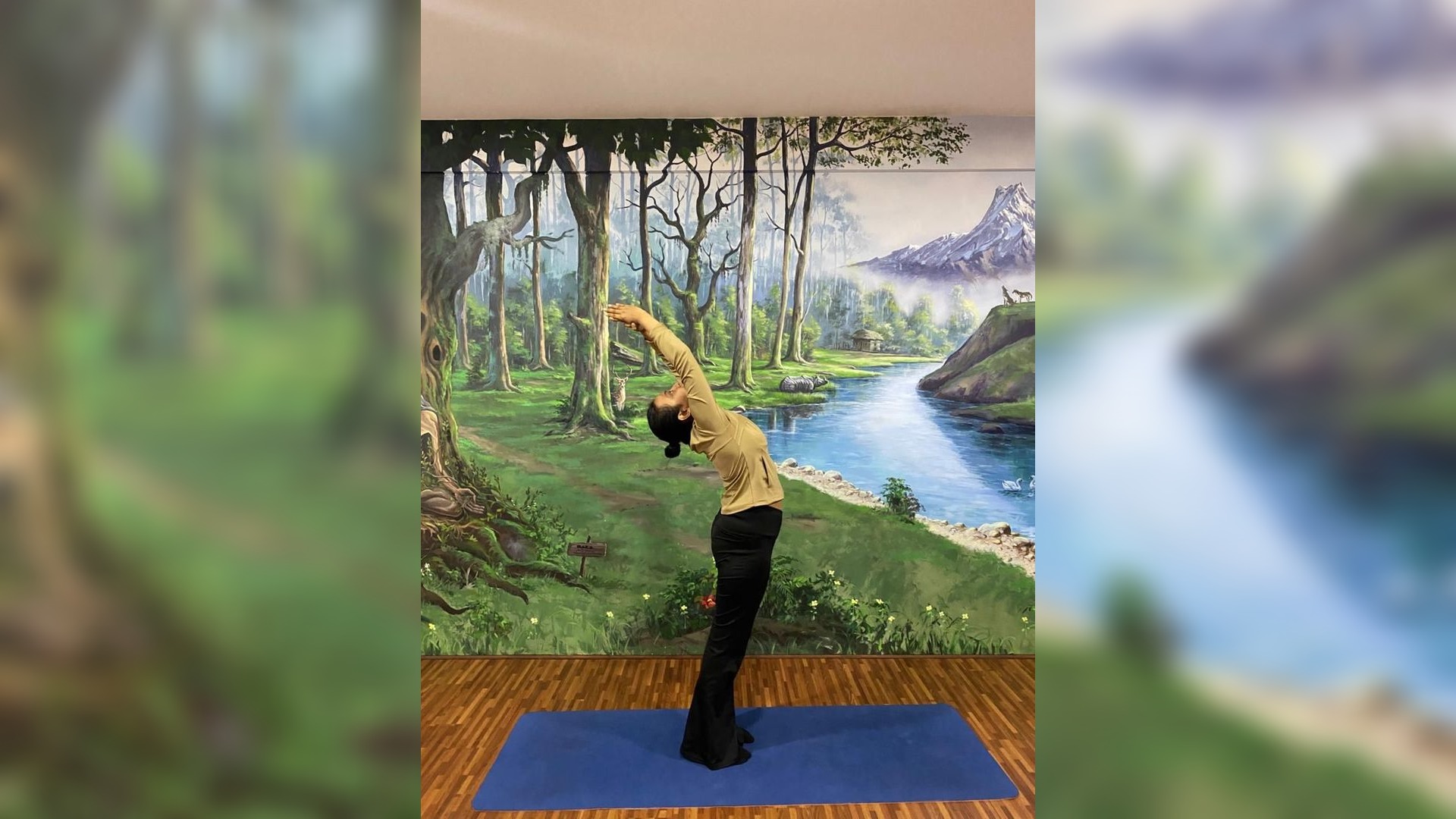
Sanskrit Name: हस्त उत्तानासन (Hasta Uttānāsana)
English Name: Raised Arms Pose
Pronunciation: HUH-stah oot-TAH-nah-sah-nah
Steps to Perform Hasta Uttanasana
- Starting Position: Stand in Tadasana (Mountain Pose), feet together and weight evenly distributed.
- Inhale and Raise Arms: Gently sweep both arms out to the sides and upward, bringing palms together above the head.
- Lift and Lengthen: Stretch upward through the fingertips, keeping shoulders relaxed and away from the ears.
- Mild Backbend: Gently arch the spine, lifting the chest up toward the sky while keeping the neck long.
- Engage Core: Draw the navel slightly inward to support the lower back.
- Gaze: Look at the thumbs or slightly upward if comfortable.
- Hold: Stay for 3–5 breaths, maintaining length rather than collapsing into the lower back.
- Release: Exhale and return arms to the sides or move into the next pose (e.g., Uttanasana in Surya Namaskar).
Benefits
- Improves Spinal Flexibility: Gently stretches the spine and chest.
- Strengthens Shoulders and Arms: Builds upper body endurance.
- Opens Chest and Lungs: Enhances breathing capacity.
- Stimulates Digestive System: Creates space and gentle massage to abdominal organs.
- Boosts Circulation & Posture: Encourages upright alignment.
- Energizing: Awakens the body — perfect for beginning Surya Namaskar.
Things to Keep in Mind
- Don’t overarch the lower back — lengthen through the spine.
- Keep ribcage drawn in to avoid collapsing into the lumbar.
- Relax the shoulders and avoid shrugging upward.
- If neck discomfort occurs, keep the gaze forward instead of upward.
- Distribute weight equally on both feet.
Variations & Modifications
- Beginner Tip: Keep arms shoulder-width apart if palms don’t meet comfortably.
- Mild Version: No backbend — simply lift arms and lengthen upward.
- Chest Opening Variation: Interlace fingers and turn palms upward while lifting arms.
- Advanced Variation: Deepen the backbend by lifting the sternum higher and engaging glutes to protect spine.
- Props: Practice with back against a wall to understand alignment.
Contraindications
- Avoid deep backbend in case of:
- Severe lower back pain
- Herniated disc
- Vertigo or neck issues
- Pregnant practitioners should avoid excessive backward bending without guidance.
Preparatory and Follow-Up Poses
- Preparatory: Tadasana, Shoulder Rolls, Standing Side Stretch
- Follow-Up: Uttanasana, Urdhva Hastasana in Surya Namaskar, Ardha Chakrasana.
Energetic and Symbolic Aspects
- Chakra Activation: Opens Anahata (Heart Chakra) — encouraging love, compassion, and emotional expansion.
- Symbolism: Represents reaching upward toward higher possibilities, rising energy, and welcoming a new beginning (like greeting the sun).
Recent Blog Posts
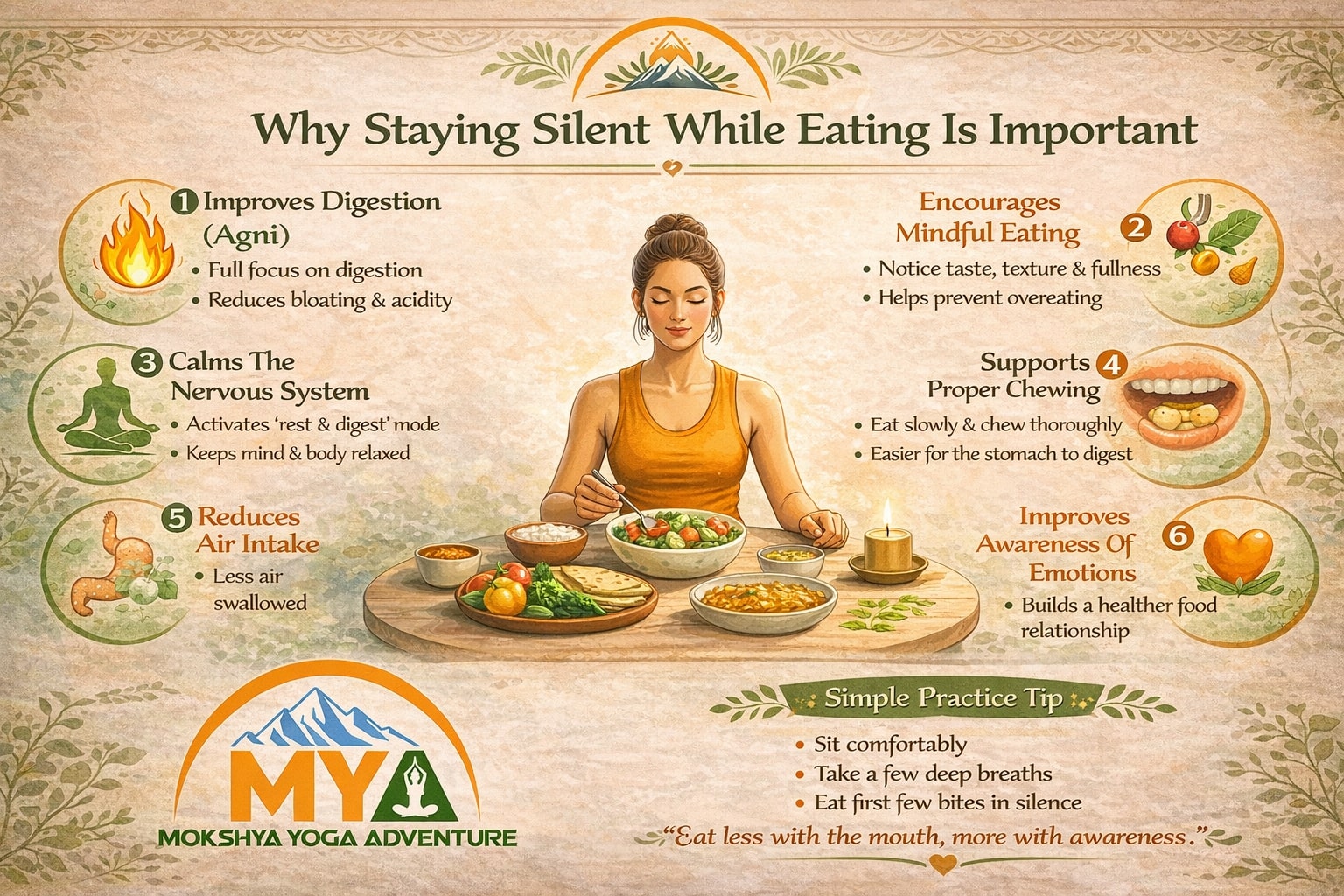
Why Staying Silent While Eating Is Important?
Jan 04, 2026
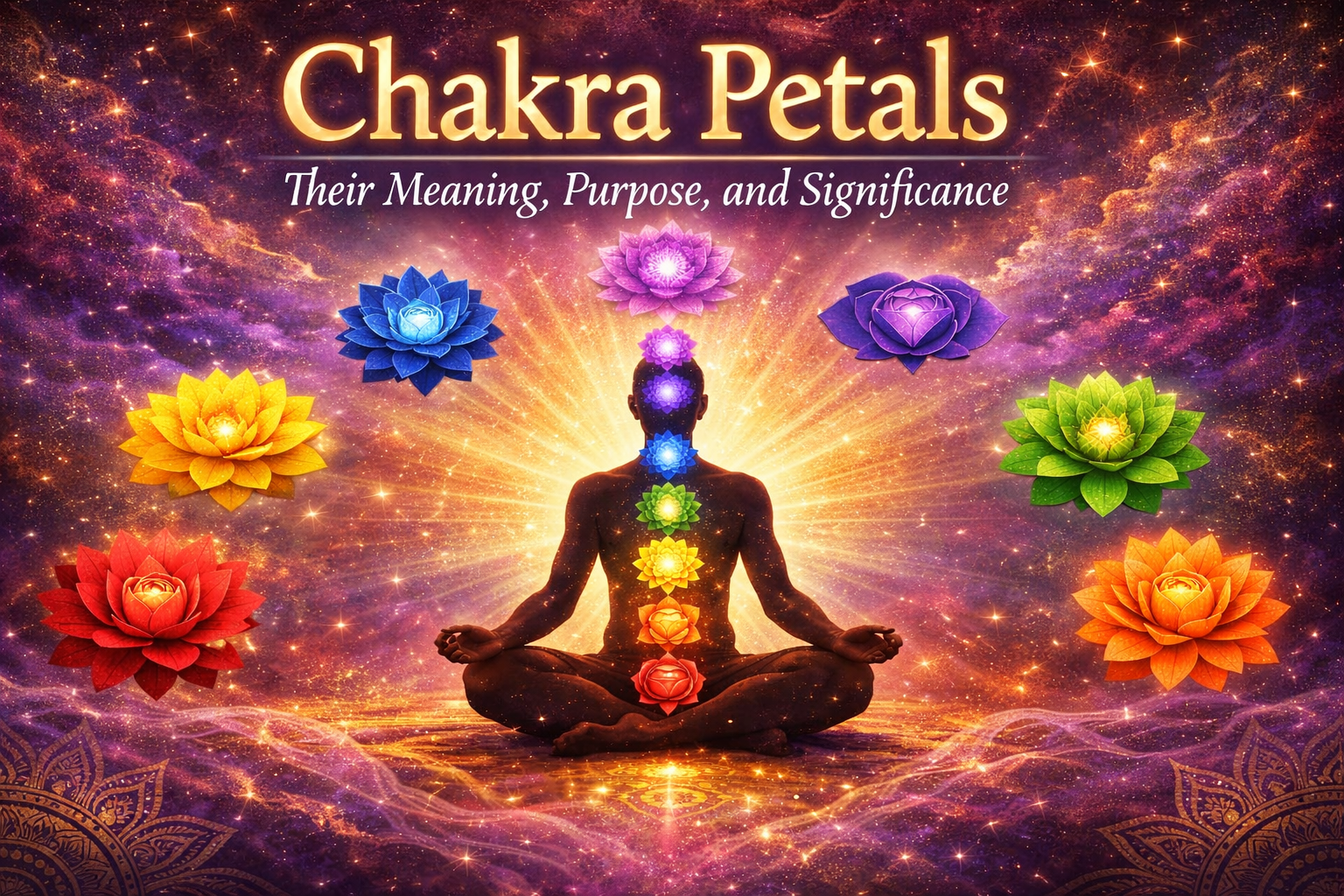
Soham Meditation: Connect with Your True Self
Dec 21, 2025

Vegetarian Sources of Good Fats
Dec 03, 2025