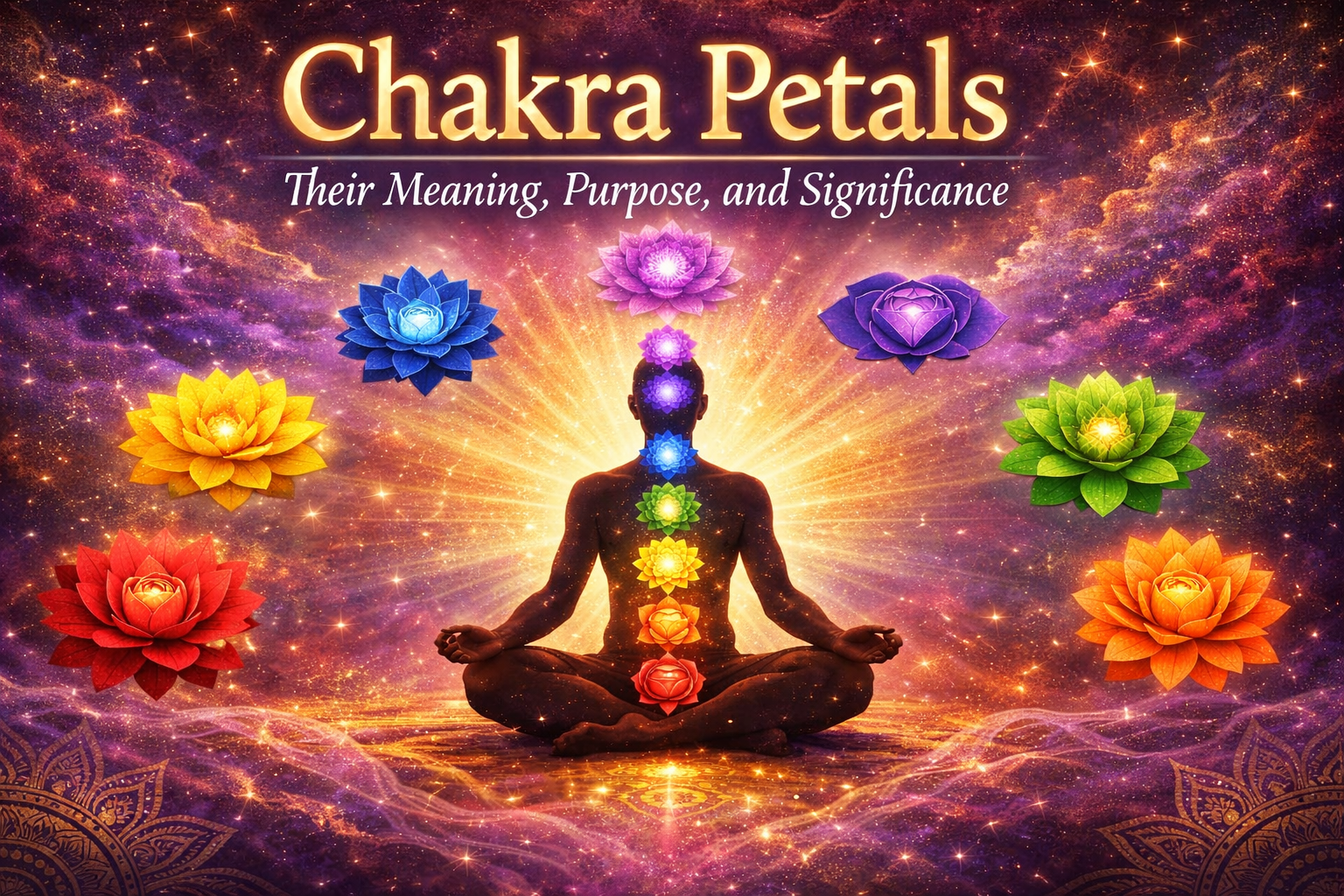
In yogic and tantric philosophy, chakras are subtle energy centers, and the petals (dalā) associated with each chakra are symbolic representations of mental, emotional, and energetic tendencies.
These petals are not physical structures; they represent vṛttis (psychological modifications of the mind), pranic movements, and specific states of consciousness.
The classical understanding of chakra petals comes mainly from ancient texts such as the Śaṭ-Chakra-Nirūpaṇa, Yoga Upaniṣads, and Tantra Śāstra.
As awareness ascends through the chakras, the number and nature of petals change, showing the evolution of consciousness from instinct to liberation.
What Do Chakra Petals Represent?
Each petal symbolizes:
- A mental or emotional quality
- A specific vibration of consciousness
- A pattern of pranic flow
- A latent tendency stored in the subconscious mind
When a chakra is imbalanced, these qualities manifest negatively.
When purified through asana, pranayama, mantra, and meditation, the same qualities express positively.
MULADHARA CHAKRA (Root Chakra)
Location: Base of the spine
Element: Earth
Petals: 4
Theme: Survival, stability, foundation
Qualities of the 4 Petals
- Dharma – Sense of duty, ethical foundation, order
- Artha – Need for material security, livelihood, safety
- Kāma – Basic desires, physical needs
- Mokṣa (latent) – Dormant spiritual aspiration
🔹 Explanation:
Muladhara governs our sense of safety, grounding, and trust in life. Fear, insecurity, and instability arise when these petals are disturbed. When balanced, they create strong roots and inner stability.
SVADHISTHANA CHAKRA (Sacral Chakra)
Location: Lower abdomen
Element: Water
Petals: 6
Theme: Emotion, pleasure, creativity
Qualities of the 6 Petals
- Kāma – Desire, sensual enjoyment
- Krodha – Anger born from unfulfilled desire
- Lobha – Greed, excessive craving
- Moha – Attachment, emotional confusion
- Mada – Pride, possessiveness
- Mātsarya – Jealousy, comparison
🔹 Explanation:
This chakra governs relationships, sexuality, creativity, and emotional flow.
When purified, desire transforms into creativity and joy.
When blocked, it creates emotional instability and attachment.
MANIPURA CHAKRA (Solar Plexus Chakra)
Location: Navel center
Element: Fire
Petals: 10
Theme: Power, will, transformation
Qualities of the 10 Petals
- Lajjā – Shame
- Piśunatā – Malice, fault-finding
- Īrṣyā – Envy
- Tṛṣṇā – Strong craving
- Suṣupti – Lethargy, dullness
- Viṣāda – Sadness, despair
- Kaṣāya – Emotional rigidity
- Moha – Ego-based delusion
- Ghr̥ṇā – Aversion, dislike
- Bhaya – Fear of failure or loss
🔹 Explanation:
Manipura controls self-esteem, confidence, digestion, and ambition.
Balanced fire creates discipline and courage.
Excess fire causes anger, control issues, and ego conflicts.
ANAHATA CHAKRA (Heart Chakra)
Location: Center of the chest
Element: Air
Petals: 12
Theme: Love, balance, compassion
Qualities of the 12 Petals
- Āśā – Hope
- Cintā – Concern or worry
- Ceṣṭā – Effort
- Mamatā – Emotional attachment
- Dhṛti – Patience, courage
- Lajjā – Humility
- Vikalatā – Hesitation
- Ahaṁkāra – Subtle ego
- Viveka – Discrimination
- Lalitā – Gentleness
- Samatā – Balance
- Kṣamā – Forgiveness
🔹 Explanation:
Anahata is the bridge between lower instincts and higher wisdom.
Here love matures into compassion, forgiveness, and emotional balance.
VISHUDDHA CHAKRA (Throat Chakra)
Location: Throat
Element: Ether (Space)
Petals: 16
Theme: Communication, purity, truth
Qualities of the 16 Petals
- Nāda – Sound awareness, subtle inner vibration
- Udgāra – Expression, articulation
- Śraddhā – Faith, trust
- Smṛti – Memory, recollection
- Vicāra – Reflection, contemplation
- Saṁskāra – Subtle mental impressions
- Sukha – Inner joy, happiness
- Duḥkha-bodha – Awareness of suffering
- Śuddhi – Purification, clarity
- Tṛpti – Contentment
- Vairāgya – Detachment, non-attachment
- Santoṣa – Satisfaction, acceptance
- Ātma-jñāna – Self-awareness, self-knowledge
- Mantra-śakti – Power of mantra and sound
- Satya – Truthfulness, authenticity
- Ākāśa-bhāva – Spaciousness of mind, expansiveness
🔹 Explanation:
Vishuddha refines speech, thought, and expression.
When balanced, communication becomes honest, calm, and healing.
AJNA CHAKRA (Third Eye Chakra)
Location: Between the eyebrows
Element: Mind
Petals: 2
Theme: Intuition, wisdom
Qualities of the 2 Petals
- Ha – Logical, solar awareness
- Kṣa – Intuitive, lunar awareness
🔹 Explanation:
Ajna represents the union of intellect and intuition.
Duality dissolves into clarity, insight, and inner guidance.
SAHASRARA CHAKRA (Crown Chakra)
Location: Top of the head
Petals: 1000 (symbolic)
Theme: Liberation, pure consciousness
Qualities
- Pure awareness
- Bliss (Ānanda)
- Silence
- Non-duality
- Infinite wisdom
🔹 Explanation:
The 1000 petals symbolize limitless expansion of consciousness. Here, the yogi experiences oneness with universal consciousness.
Recent Blog Posts

Soham Meditation: Connect with Your True Self
Dec 21, 2025

Vegetarian Sources of Good Fats
Dec 03, 2025


When Is the Best Time to Practice Yoga?
Oct 28, 2025